
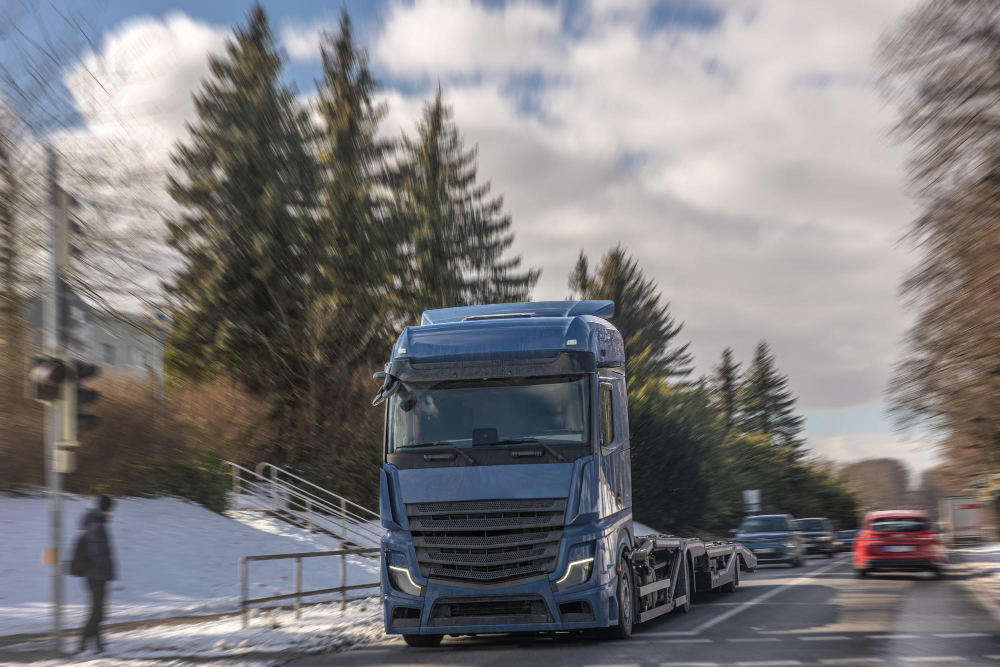
Plenty of people drive for a living without a commercial driver’s license. Courier vans, box trucks, moving trucks, and lighter hotshot rigs all move freight every day in Las Vegas, driven by people who never sat for a CDL skills test.
So the question is a fair one. It is also usually asked backward, as though the choice is about avoiding a test rather than choosing a career. The better way to frame it is what each path lets you do for the next ten years.
Where the line actually falls
One number separates them.
Under federal rules at 49 CFR 383.5, a CDL is required once a vehicle hits 26,001 pounds gross vehicle weight rating, or once a combination hits 26,001 pounds gross combination weight rating with a towed unit rated above 10,000 pounds. Below that, you can operate on a regular license.
That is the whole legal distinction, and we cover how it plays out in practice in our article on whether hot shot trucking requires a CDL. Everything else about the two paths is a business and career question rather than a licensing one.
Non-CDL does not mean unregulated
This is the most expensive misunderstanding in the whole conversation, and it catches new operators constantly.
Federal safety regulation does not start at the CDL threshold. Under 49 CFR 390.5, a vehicle becomes a commercial motor vehicle at 10,001 pounds gross vehicle or combination weight rating when used in interstate commerce. That creates a band between 10,001 and 26,000 pounds where no CDL is required and federal rules still apply in full.
Drivers and carriers operating in that band are generally looking at a USDOT number, a driver qualification file under Part 391, a DOT medical examiner’s certificate, hours of service compliance, and vehicle maintenance records. A one-ton pickup pulling a loaded gooseneck across the state line is squarely in this territory, even though the driver holds an ordinary Nevada license.
The federal drug and alcohol testing program is the main piece that tracks the CDL rather than the weight, applying to drivers required to hold one. Everything else in that list applies whether you have a CDL or not.
What each path opens up
The practical difference is the range of work available to you.
Non-CDL driving covers last-mile delivery, courier routes, smaller moving jobs, service and landscaping fleets, and lighter hotshot loads. The work exists, the barrier to entry is low, and in a city this size there is steady demand for it.
A Class B opens straight trucks over the threshold, which in this valley means dump trucks, mixers, waste, transit, and heavy service vehicles. Construction across the Las Vegas Valley runs on Class B drivers, and the work is local with predictable hours.
A Class A opens everything above that, including tractor-trailers, tankers, flatbed, doubles and triples, LTL, regional, and long haul, plus the resort and casino supply chains that keep this city stocked. Our rundown of jobs you can get with a CDL license in Las Vegas goes through the specific roles.
Earnings follow the ceiling, not the license
A license does not pay you. What it does is determine which jobs you are allowed to bid on.
Non-CDL work generally competes on a labor market that anyone with a clean driving record can enter, and pay reflects that. The barrier being low is exactly what keeps the ceiling low.
Class A work sits behind a barrier, and pay reflects that too. Endorsements raise it further, since hazmat, tanker, and doubles qualify you for freight that many drivers cannot legally touch. Specialized work pays a premium precisely because the pool of drivers able to do it is small.
The owner-operator question
For people who want to run their own operation rather than drive for someone else, the calculation shifts.
Non-CDL hotshot is the cheapest realistic entry into ownership. A capable pickup and a gooseneck cost a fraction of a sleeper tractor, insurance is lower, and you can be hauling sooner. The tradeoff is that you are limited to what fits under the weight threshold, which limits which loads you can accept and what they pay.
A Class A operator can take anything, including the heavy and specialized freight that pays best, at considerably higher startup and insurance cost. Plenty of drivers take hotshot training first, learn the business side on smaller equipment, and move up once they understand how loads, rates, and deadhead actually work.
Time and cost to get started
Entry timelines differ more than most people expect.
Non-CDL requires no school. That sounds like an advantage until you look for work, because employers still want experience with the equipment and an insurable record, and neither is instant.
A CDL requires entry-level driver training from a provider listed on the federal Training Provider Registry before you can take the skills test. At Truck U, Class A runs four weeks and Class B runs one to two weeks, with evening and weekend options for people training around a current job. Our CDL training programs cover both, along with refresher and upgrade courses for drivers who already hold a license.
The testing side happens at the single commercial DMV in the valley, on Donovan Way in North Las Vegas, and a DOT physical is required before training begins. Our Las Vegas CDL school walks students through both steps rather than leaving them to figure out the sequence alone.
Frequently asked questions
1) Can I start non-CDL and get a CDL later?
Yes, and many drivers do. Time behind the wheel of a lighter commercial vehicle builds habits and an employment record that carry over, though you still complete entry-level driver training before testing for the CDL.
2) Do I need a DOT medical card for non-CDL driving?
If you operate a vehicle rated at 10,001 pounds or more in interstate commerce, generally yes. The medical certificate requirement follows the federal commercial motor vehicle definition, not the CDL threshold.
3) Is non-CDL work steadier than CDL work?
It is usually more local, which is different from steadier. Local routes mean home most nights, while CDL work ranges from local Class B jobs to long haul, so both paths offer options depending on the employer.
4) Which pays better for a career changer starting at 40?
Class A generally has the higher ceiling, and the training window is short enough that the switch is realistic. The right question is which schedule and which work you want to be doing in five years.
5) Do I need a CDL to pull a gooseneck trailer?
It depends on the ratings of the truck and trailer combined rather than on the trailer style. Combinations above the federal threshold require a Class A regardless of what the trailer looks like.
Conclusion
Non-CDL driving is a legitimate way to earn a living and the fastest way onto the road. It also comes with a ceiling on the work you can accept and, for anyone crossing the 10,001 pound line, most of the federal compliance burden anyway.
Truck U is a Las Vegas CDL school with FMCSA-approved programs listed on the federal Training Provider Registry, discounted pricing for veterans, military, law enforcement, government personnel, and first responders, and instructors who teach the job rather than the test.
Call 702.533.3565 or schedule an appointment and we will walk through which path fits what you are trying to build.